This was my second time visiting Jeonju Hanok Village. Decided to take KTX (Korea High Speed Train). I rediscovered that we could book our tickets via Korail which I remembered doing so many years back. However, for my previous trip for some weird reason, I could not access Korail website. I ended up paying too much for my KTX via another service provider. Oh well! 🤷♀️
The journey from Seoul to Jeonju takes around 2 hours we wanted to take the opportunity to explore the city at our own leisure time. Upon reaching Jeonju KTX station, there was a line of taxis waiting to pick up guests. If you want to hire an Uber ride I believe you will need to exit the train station in order to wait for your ride.
We just followed the flow and joined the taxi line, it did not take us very long to board the taxi. Just a note that the taxi drivers does not speak much English; therefore, it is best to show them the address of the place you want to visit.
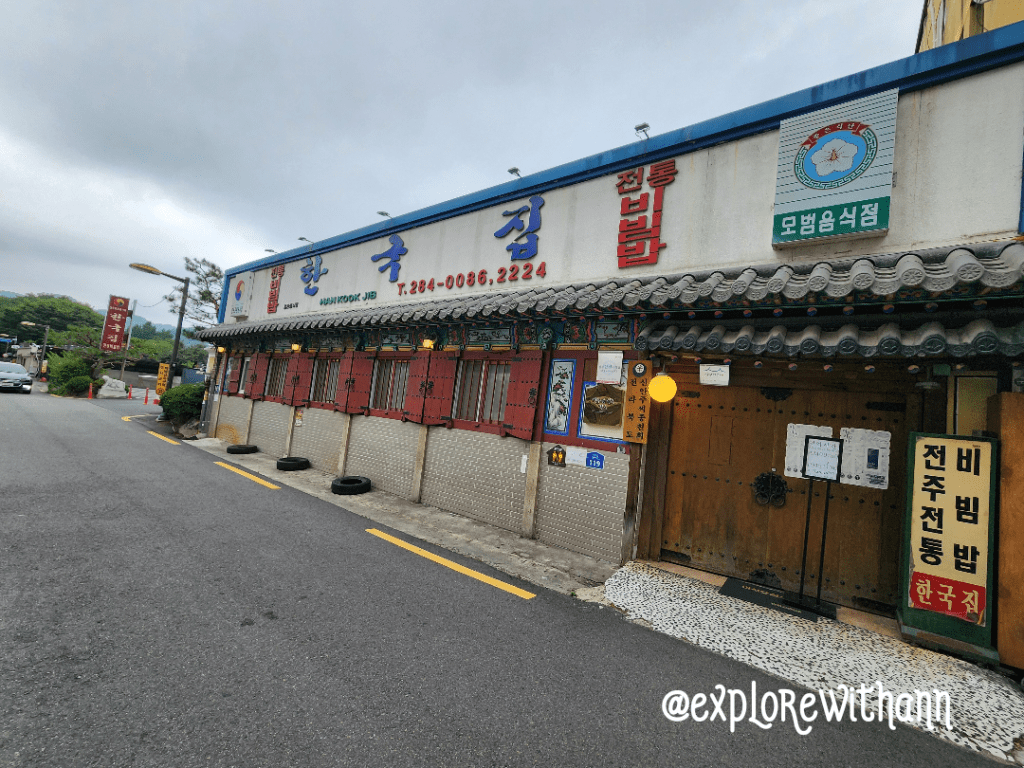
Initially, we thought Hangukjip opens at 10.30am and we would have to hang around for a while. When we arrived we saw a sign which indicated they opened at 9.50 am. Which was great as we did not have to wait too long.
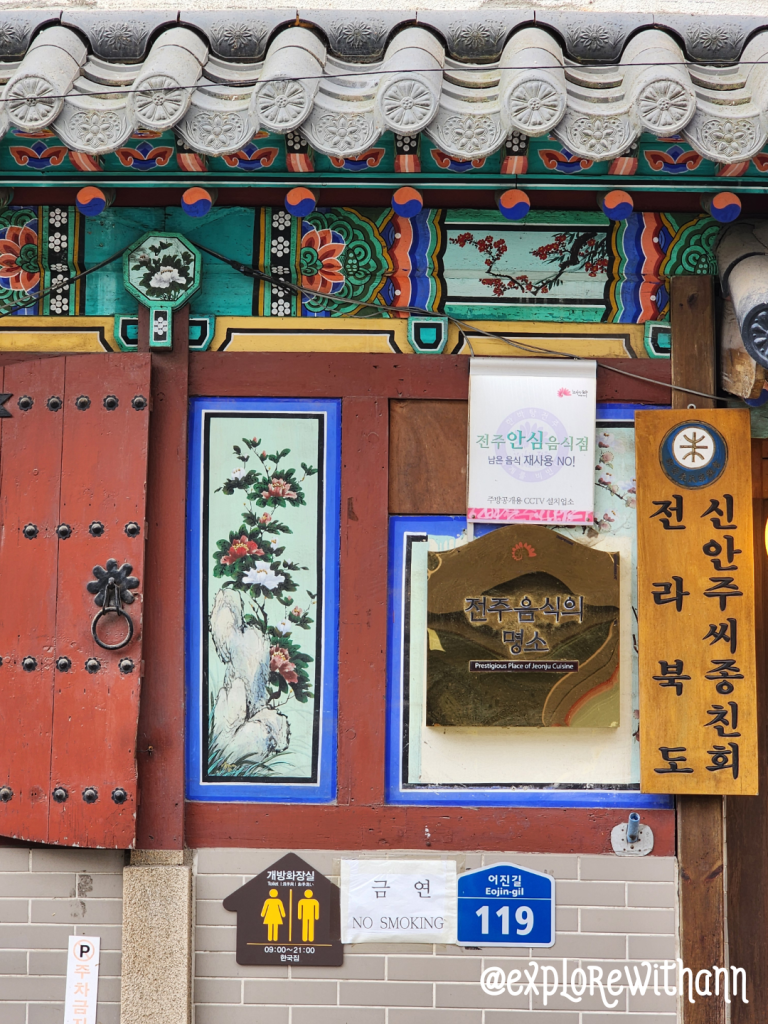
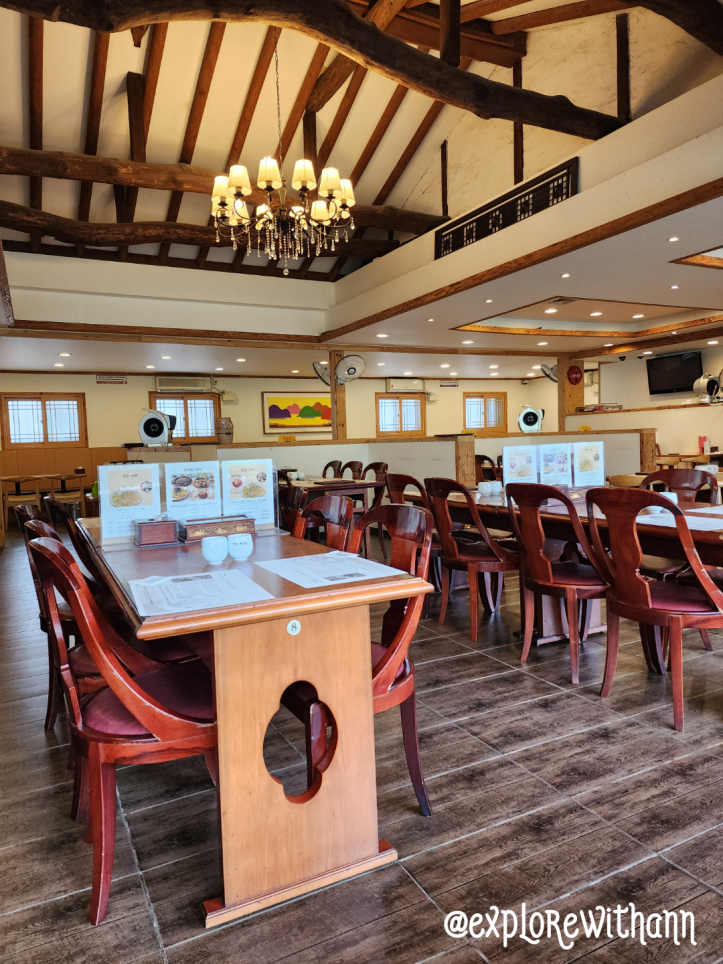
Hangukjip opened in 1952 and it was one of the first restaurants in Korea to serve Bibimbap. This family owned business has run for three generations and was the only Korean restaurant to be introduced to the Michelin Guide in 2011. The restaurant is located at a refurbished Hanok house, it has it’s own courtyard where I saw many Korean Ceramic Jars lining up at a shady corner of the courtyard. I also read that Hangukjip ferments their own red hot chilli paste and homemade soy sauce.
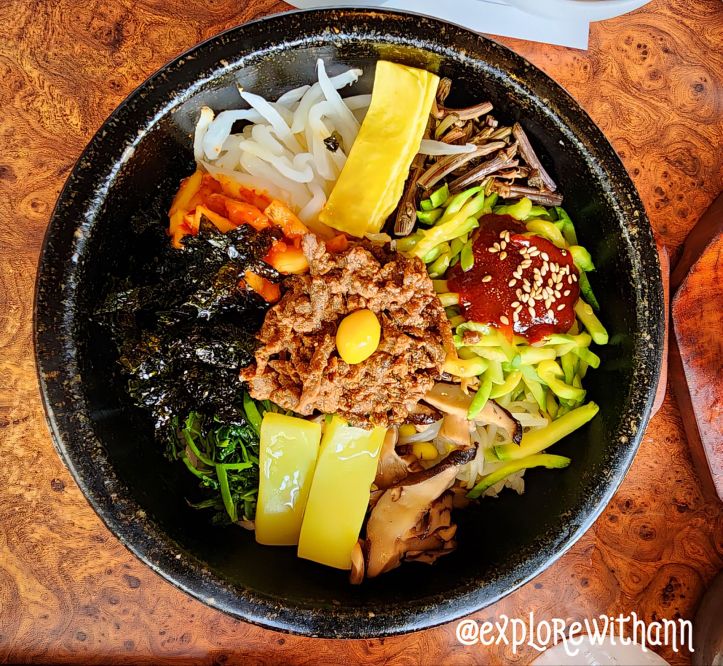
I am never a fan of Bibimbap due to the type of vegetables that are served. However, Hangukjip Jeonju Bibimbap is different from what was usually served in Singapore. Jeonju Bibimbap has mushrooms, bracken (a type of fern), fermented white radish, spinach, mung bean sprouts, seaweed, zucchini, hwangpo mukhoe (mung bean jelly dyed with soaked gardenia seeds water to give it the bright yellow colour), Hangukjip in house hot chilli paste and topped with seasoned beef in the hot stone bowl.
It was at Hangukjip that I saw for the first time bean sprouts soup. Erm never a fan of bean sprouts and the soup was cold and tasted weird (no offence!) One tiny sip and never gone back for second.
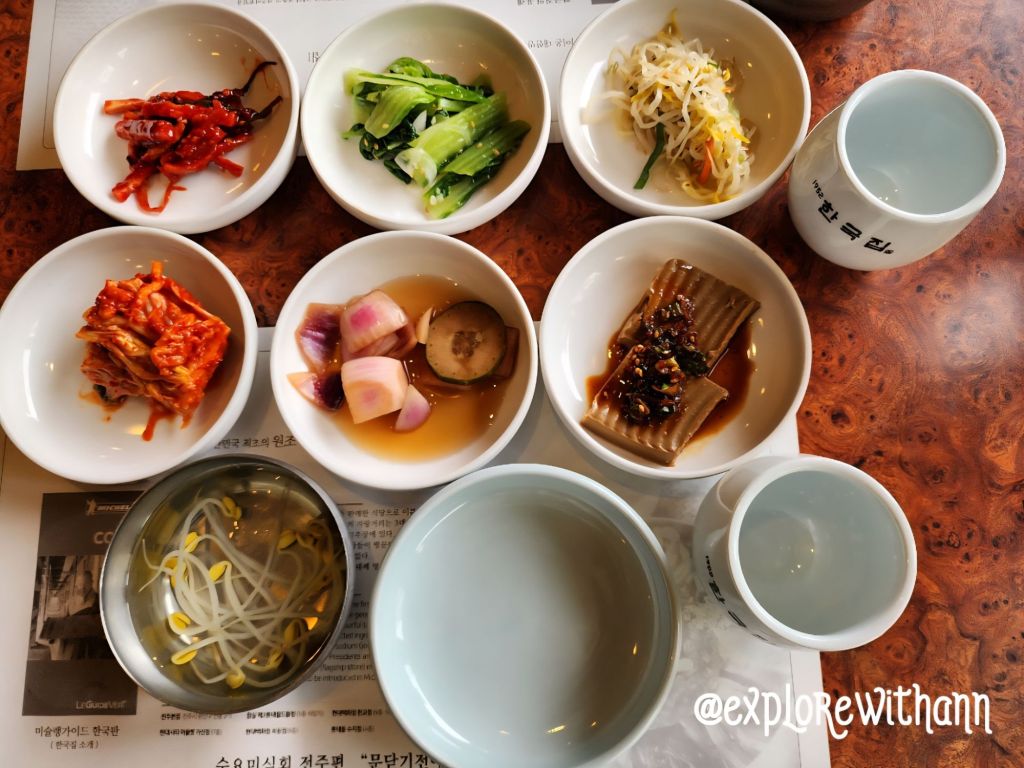
In no time our Bibimbap arrives. It smells so good and visually it looks so tempting. It seems like the chef has carefully thought about the placement of the vegetables so that the colours pop. We also ordered a serving of seasoned stir-fry beef to go along with the Bibimbap.
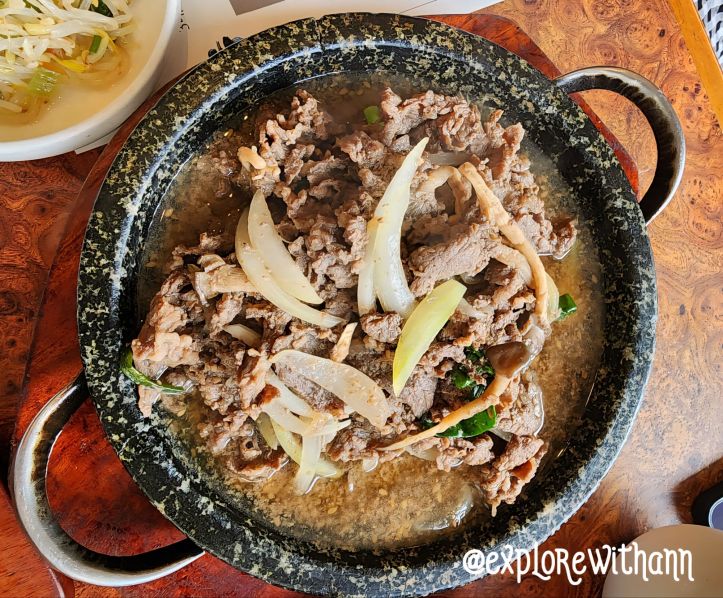
In case you are wondering, yes before we mixed the Bibimbap, the bean sprouts were carefully separated out. The first bite of the Bibimbap was really pleasant, all the vegetables mixed with the seasoned beef complement each other. Hwangpo mukhoe does not have much taste (not sure if it was meant to be like this).
For the seasoned stir-fry beef I believed they used better quality beef. While I am not sure if they used Korean beef, it was soft, chewy and tasty! The taste and texture of the beef is definitely different from the ones we have back home.
Overall it was a satisfying meal. Do come by and give it a taste to see how Jeonju Bibimbap differs from the other parts of Korea or even your home country’s Bibimbap at the local Korean restaurant.
XOXO
You might be interested in these:
Seoul – Myeongdong Seoseo Galbi
** This is Part 2 of my dinner experience after the delicious gopchang. If you would like to experience standing, no frills BBQ. My friends welcome to Seoseo Galbi. When I first heard of this concept I was intrigued. Why would one want to enjoy a delicious full meal standing? We could have opted to…

Seoul – Gunjadaehan Gopchang (Myeongdong Branch)
I visited Korea so many times yet I never had the opportunity to try grilled gopchang. In the past gopchang was consider as a cheap and nutritious food, as the time passes by gopchang is now consider as a delicacy where local Korean enjoy pairing it with alcohol. Gopchang is the intestine of either a…
Jeonju – Jeonju Hanok Village
Within Seoul there are a number of Hanok villages and the more prominent one is Bukchon Hanok Village. Bukchon Hanok Village is closer to Gyeongbokgung Palace and it is also a residential area. The last time I was there, I constantly see signage asking visitor to lower their volume and once I overhear a residence…
Something went wrong. Please refresh the page and/or try again.
 Explorewithann